
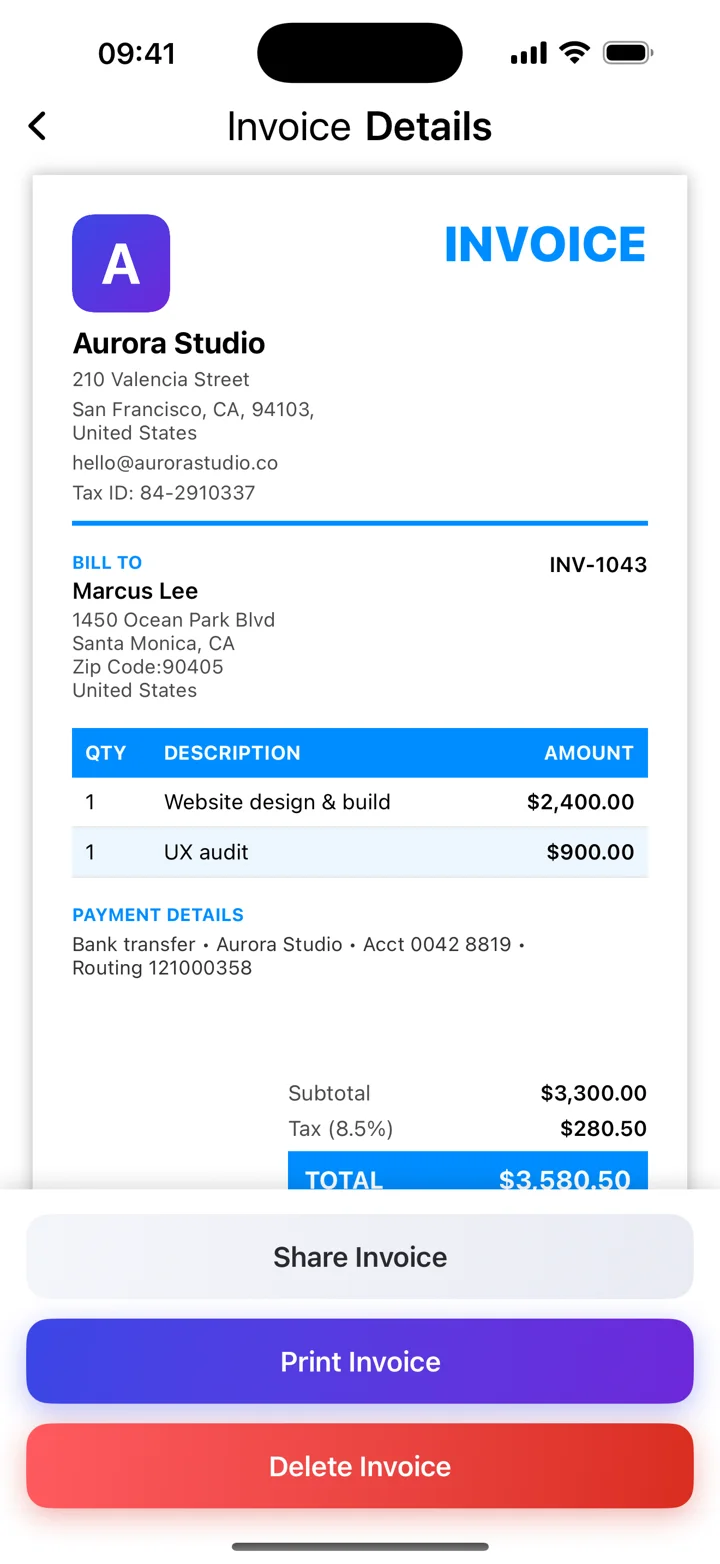
An invoice explains the amount due
Send an invoice to describe the goods or services, show the amount, and explain the agreed payment instructions. It normally includes an invoice reference and relevant dates. For example, a designer sends an invoice for a completed project before the client transfers the money.
A receipt records a payment
After a payment is confirmed, a receipt can record the date, amount, and what the payment relates to. The document requirements depend on the transaction and local rules. A card transaction notification and a business receipt are not automatically interchangeable.
Keep the payment status accurate
When you confirm a payment, update the invoice’s status in your records. In Invoice Maker, recording an invoice as paid helps organise the overview. That status is a record you maintain; it should not be described as automatic payment processing.
Keep both sides of the record
Retain the invoice you issued and the payment evidence that relates to it. If the client asks for confirmation, refer to the invoice number and actual payment amount. For partial payments, make the remaining balance clear.
These guides explain everyday invoicing workflows. Examples are illustrative; check the rules that apply to your business and location.
Reference: GOV.UK — UK invoice requirements ↗